Traab offers a global perspective on an understudied phenomenon dispossession in North Africa
History
This project results from a long-term collaboration between Soraya El Kahlaoui, principal investigator of this project, and Mariem Bentarjem, statistician and co-founder of the Tunisian NGO Barr Al Aman. It aims to create bridges between the statistical approach and the qualitative approach to tackle environmental issues in North Africa.
This collaboration resulted in the development of the “Digi-Traab” application as a mapping tool. Soraya El Kahlaoui’s skills as a social scientist, coupled with Mariem Bentarjem’s expertise in terms of data management, allow this project to achieve a global vision combining a quantitative and qualitative approach, data structuring, and storytelling.
Counter Mapping
Following the philosophy of counter-mapping, Traab.org has the following objectives :
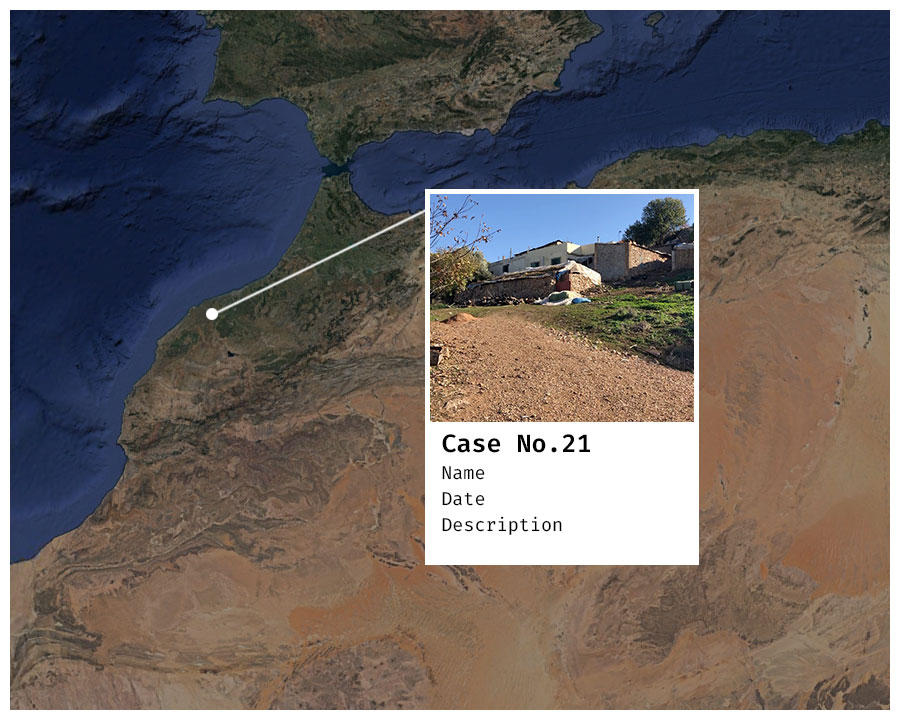
- To offer an interactive map of cases of dispossession (Land/resources & Housing) in North Africa. Currently, only cases in Tunisia and Morocco are listed, but the long-term objective is to open the project to Algeria and Libya as well.
- Collection of data through the application.
- Creation of a network of researchers, NGOs, journalists and other relevant stakeholders.
- Visualizing the legislation.
Citizen Science
This project is rooted in the field of “citizen science”. In this sense, the project will be built entirely in open data Mapping and open source Digi-Traab Application in order to allow the participation of academics, students, journalists, activists and certain communities in the creation of a collaborative and evolving data base.
Participatory mapping thus provides a virtual space for citizens to share their views on the challenges posed by dispossession not only from an ecological perspective but also from a socio-economic one. Engaging citizens in the creation of participatory mapping is one of the key strategies for raising awareness about the challenges of dispossession.
Our impact